art project by Tanja Ostojić/ with a special guest: Suwan Leimanee
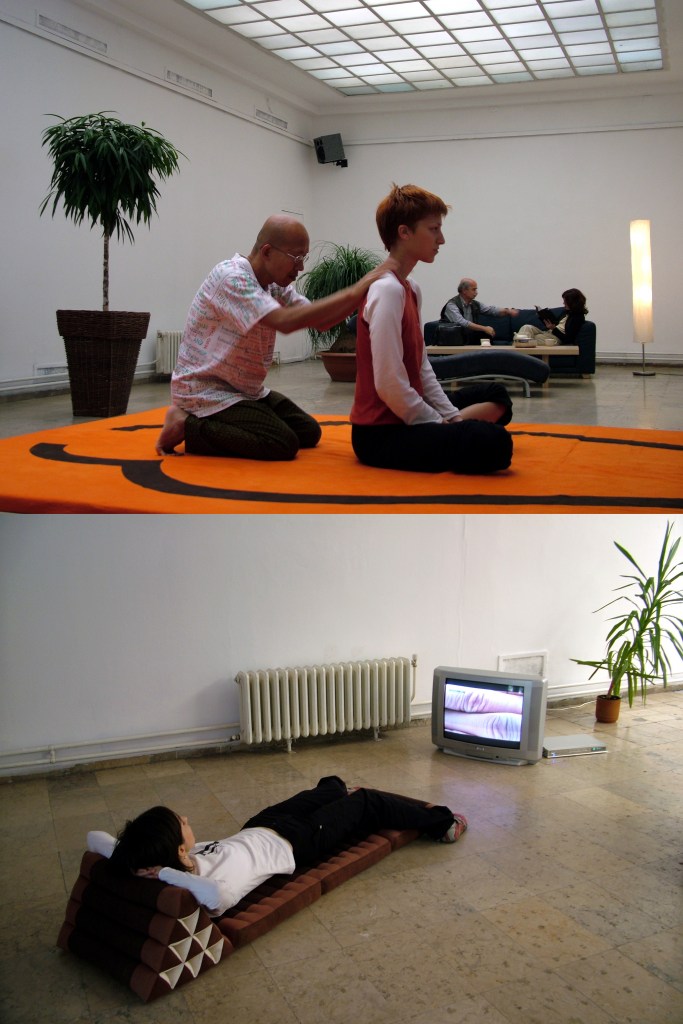
The following were installed at the Salon of the Museum of Contemporary Art Belgrade:
– Reception and waiting room
– Salon for traditional Thai massage
– Tea salon
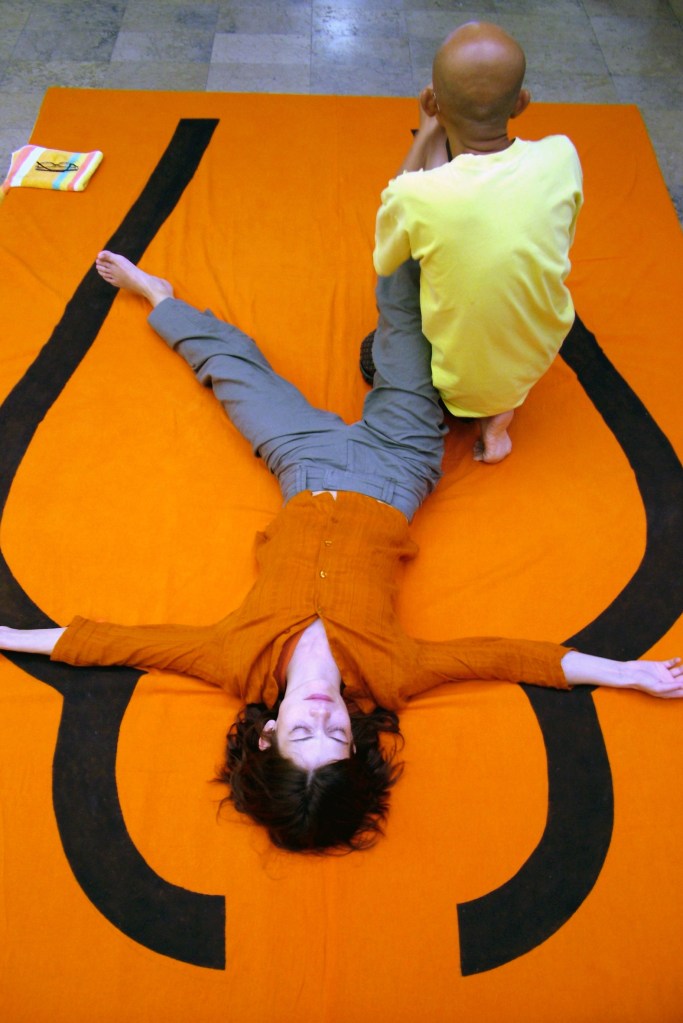
Visitors who made their appointments for either the Massage salon or the Tea salon waited for their turn in the pleasantly furnished waiting room. They had at their disposal art magazines, books, catalogues and hand-made traditional Thai medical preparations. Then the visitors underwent the traditional Thai massage performed by Suwan Laimanee (the body healer) or, had the opportunity of meeting Tanja Ostojić (the soul healer) in the pleasant atmosphere of the Tea salon, where they could talk about their private lives, contemporary art or other topics over a cup of green tea. Prises were popular, with reduction for unemployed, students and pensionists. The Salon was open for twelve days, and the artists were at the visitors’ disposal for eight hours a day, often even longer than that.




From the essay by Dr Dejan Sretenović, curator of the exhibition, entitled: See me, feel me, touch me, heal me, published in the bilingual exhibition catalogue (SER/ENG, Tanja Ostojić: Salon for Body and Soul Care, MoCAB Belgrade, 2004)
A space in-between
“Salon for Body and Soul Care” is a transitional space in-between in the hierarchy of salon-type institutions, wherein a dynamic interaction is established between salon as a space for exhibiting artworks and salon as a space for providing services, that is to say, salon as a specialised institution for the aesthetic “cultivation of the spirit” and salon as a place for “body treatment”. The unfolding of this multimedia interactive installation with performative elements is based on the idea of mutual interiorisation and exteriorisation of the structures of two types of “salons”, that is, on the tactics of setting off their institutional and symbolic potential in the sphere of artistic creation organised within the framework of social practice. That means that this event is actualised in each individual moment of talking to the soul healer, physical contact with the body healer, drinking tea and consuming food, giving and taking, getting acquainted and keeping company. Being a spatial-temporal constellation of intersubjective moments, “Salon” represents a living organism which, according to Ostojić, should establish a “living connection between everyday life and art” through a direct and close interaction of two artists with each individual visitor, who turns from a passive consumer of art into an active accomplice in the creation of a work of art. “Salon for Body and Soul Care” is characterised by the radical empiricism of the performative act which constitutes artistic experience as an existential experience in itself, as a process wherein the everyday practice of “caring for oneself” (M. Foucault) and the production/consumption of art become a single event.
Care for others
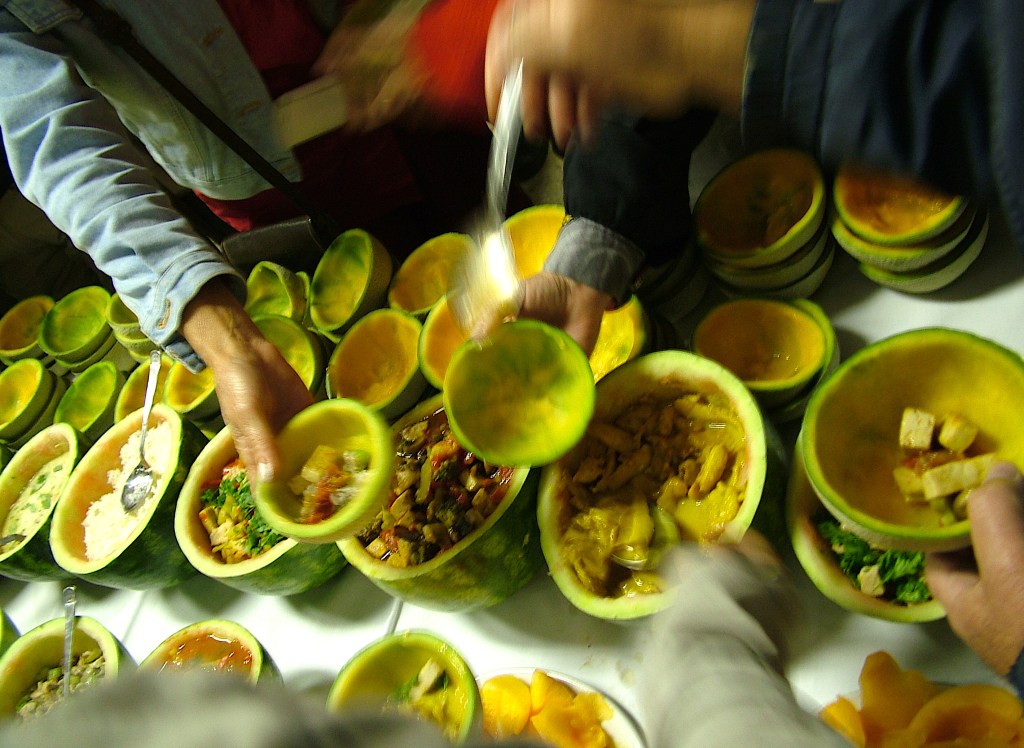
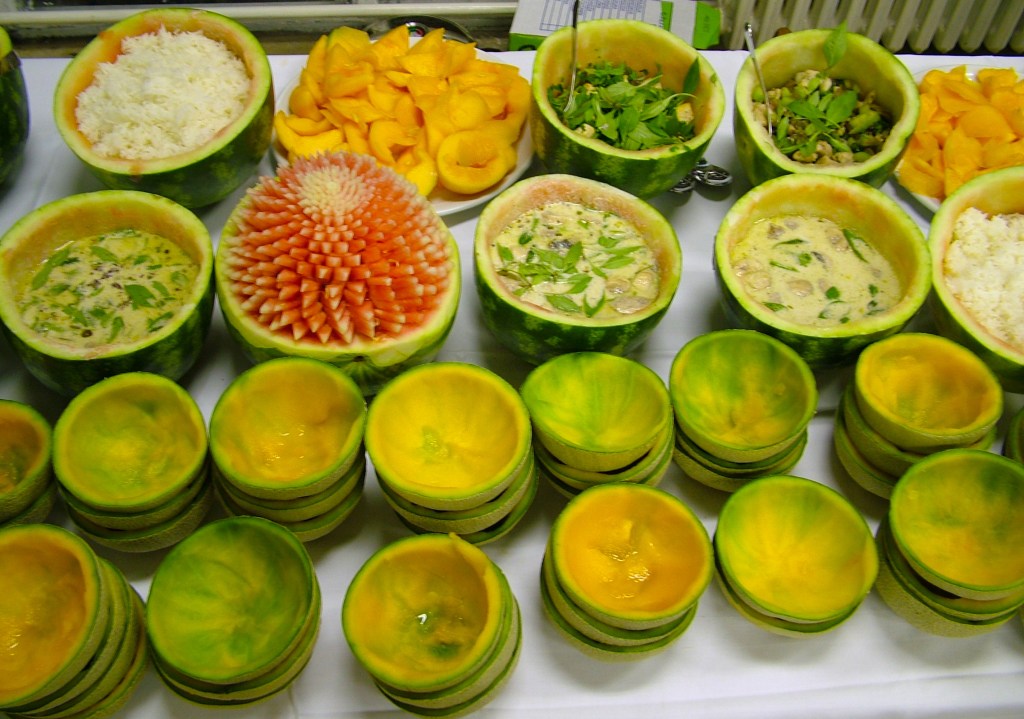
The connection between these two modes of life, “caring for oneself” and “caring for others”, which Foucault demonstrated in his History of Sexuality using the examples of doctrines and practices of the era of antiquity, is also manifested as a stimulus to intersubjective communication “leading to the strengthening of social relationships” (Foucault) and the establishment of a feeling of trust and mutual obligations.3 In many other philosophical and religious doctrines too (for example, in the tradition of Theravada Buddhism, which Suwan Laimanee originates from), it is presupposed that the practices of “care for others” are beyond the strictly utilitarian aims of a particular discipline (therapeutic, medical, spiritual) and, in accordance with an unwritten social contract of sorts, serve as the ethical agents of the harmonisation of interpersonal relationships and the stabilisation of the life of the community. Based on this or a similar premise, “Salon for Body and Soul Care” joins artists and visitors around the institutions of giving and healing, promoting art as an alternative (socio)therapeutic practice which does not address an abstract collective but concrete persons, initiating, in the process of interaction, an “intense contact” of each person with his/her “own energy and body” (T. Ostojić). Beyond Beuys’s “social sculpture” project, conferring to the artist the role of a social therapist teacher-shaman, the operative area of “Salon for Body and Soul Care” is constituted as a practice of providing services through “shaping the model of specific professional activity as a mechanism of art production” (N. Bourriaud). It should be pointed out that this model, which Bourriaud designates “operative realism”, is effective only if it is simultaneously empirically credible as a “professional activity” and tactically feasible as an artistic proposition. In this sense, Laimanee, by cooking and serving traditional Thai food at the opening of “Salon” (at the same providing information to the visitors about the genetic manipulation of Thai jasmine rice perpetrated by US biopirates), arranges a ceremony of collective enjoyment of the art of Thai cooking, thus effectively giving back value to what Victor Turner calls “communitas” (Latin = community, sociability) in order to describe a social situation resisting the institutionally differentiated structures of division of labour.
 TANJA OSTOJIĆ