photo / photo archive installation
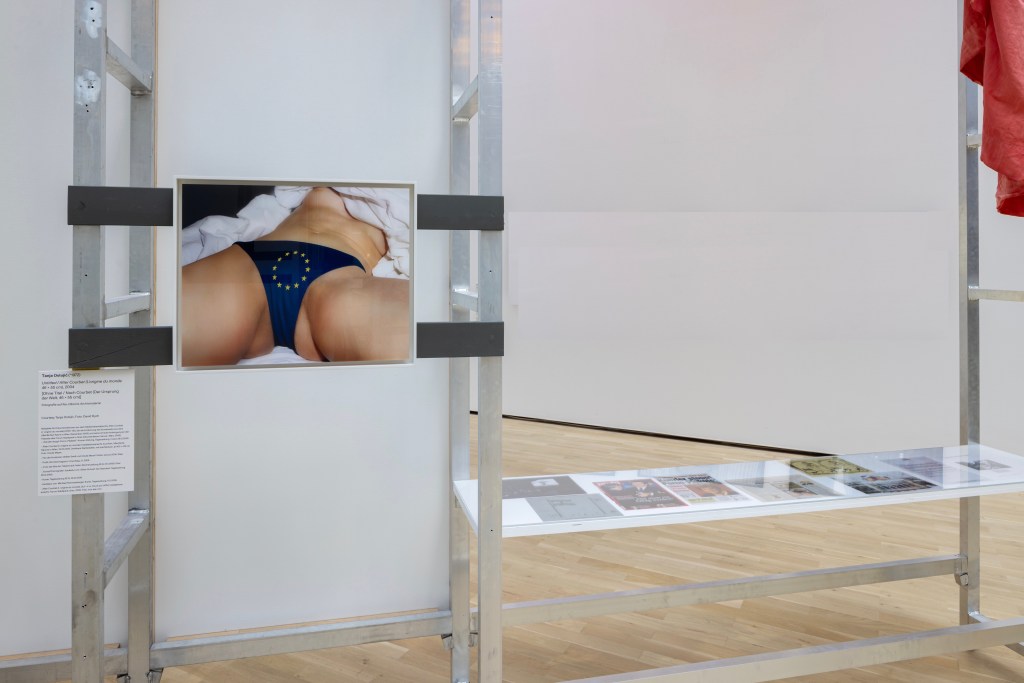
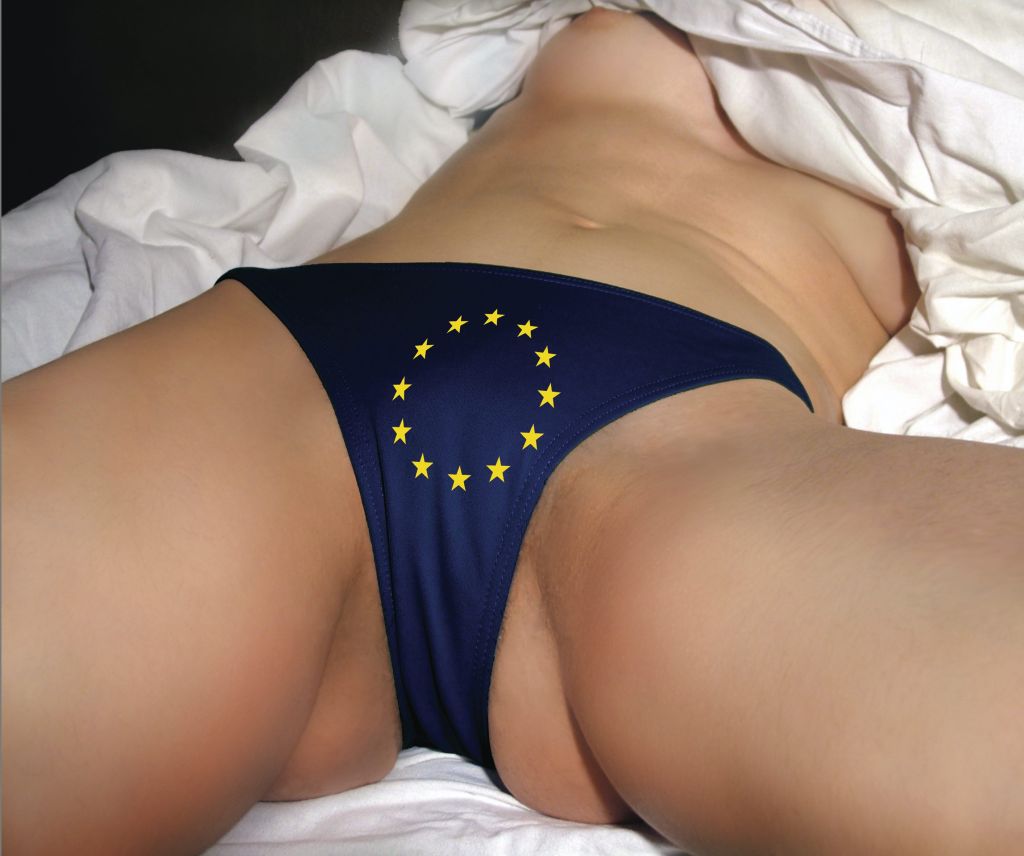
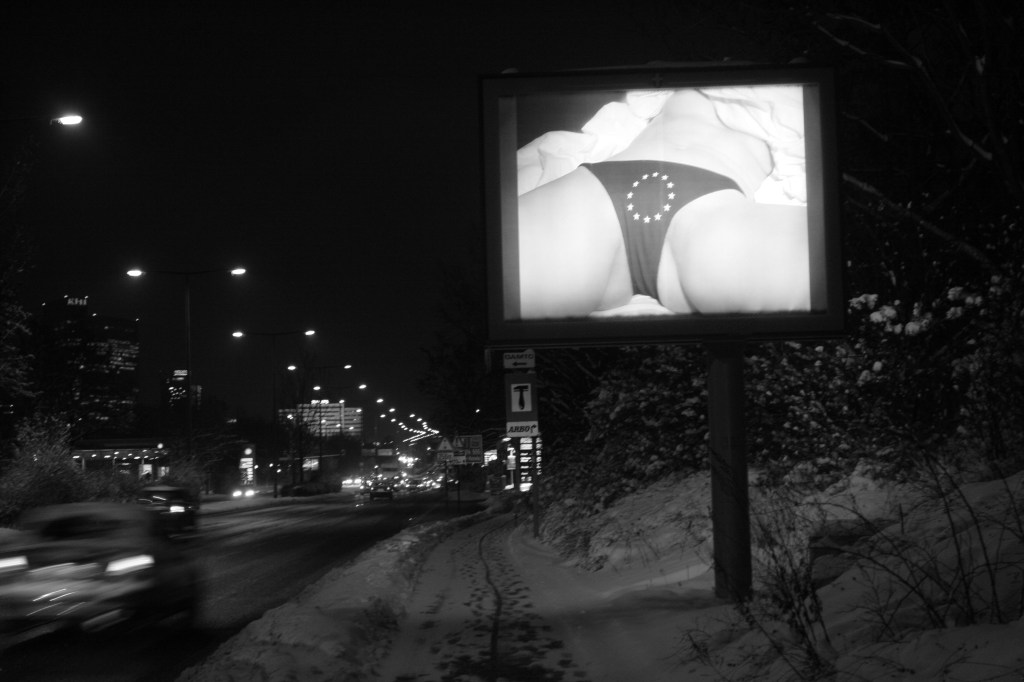
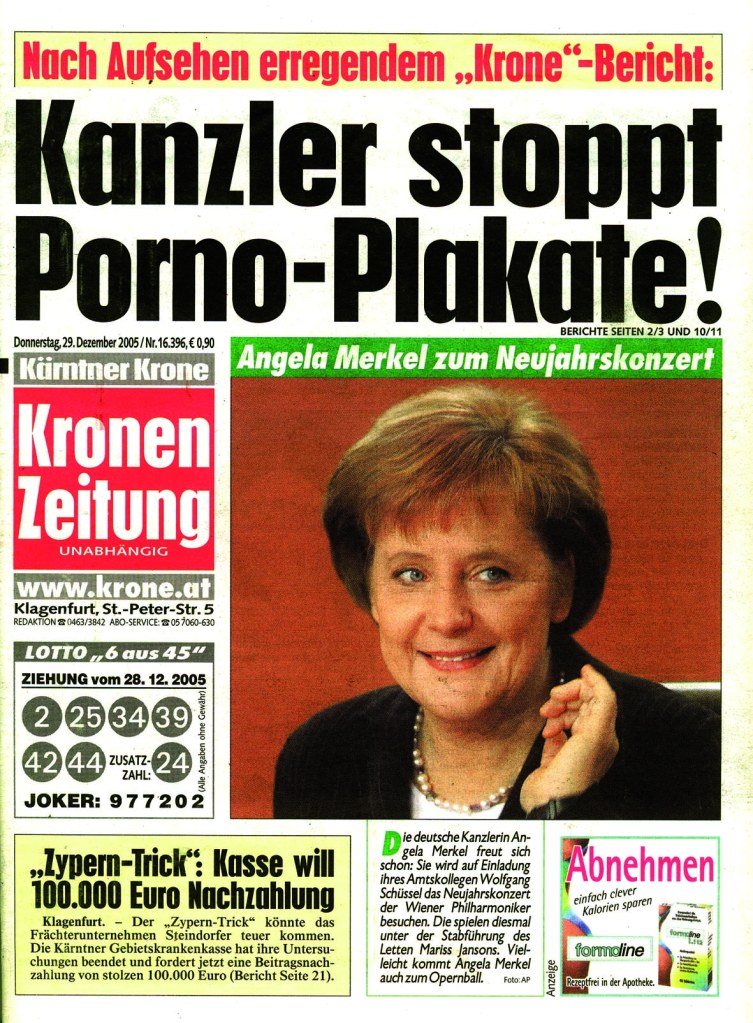
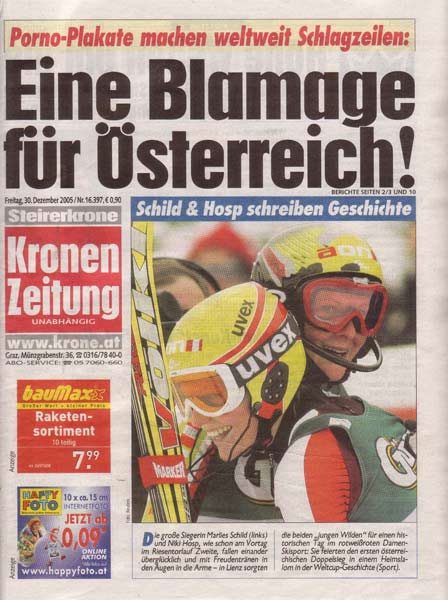
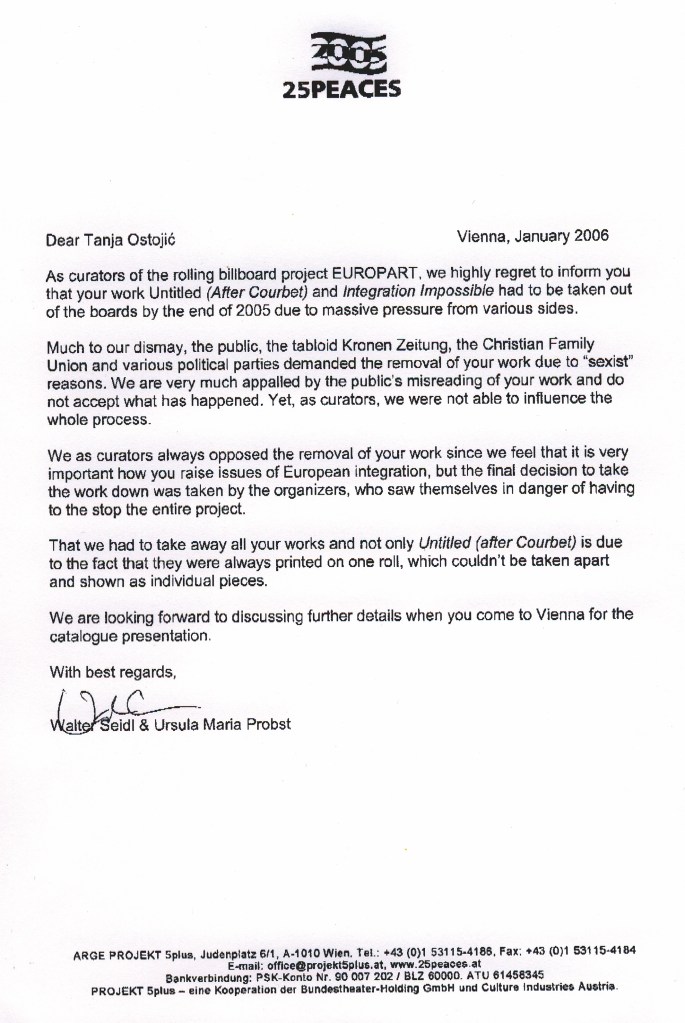
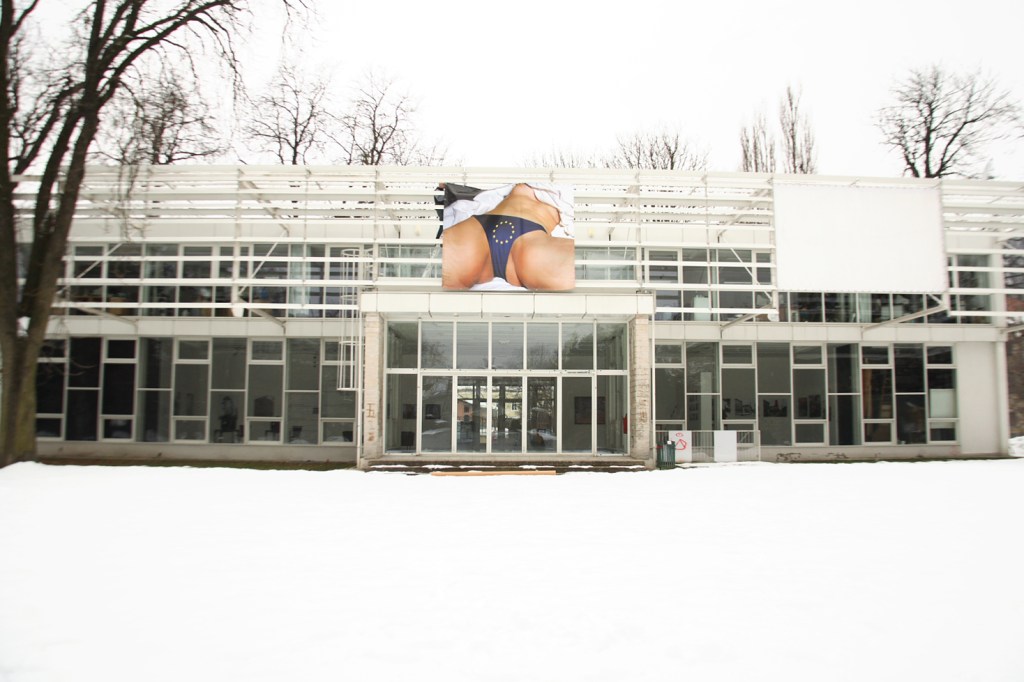
After Courbet by Tanja Ostojić was presented on rotating billboards in the EuroPart exhibition in public spaces in Vienna in December 2005. The work was removed after two days as a result of an enormous media scandal initiated by Krone Zeitung, Austrian yellow press daily, at the point when Austria was about to take over the Presidency of the EU. Over one hundred articles and over a thousand readers’ comments witnessed it in a very interesting and complex way. The poster, print on LKW plastic, 3.5 x 4 metres in size, was re-mounted on the façade of Forum Stadtpark in Graz from January until March 2006 and discussions around this censorships were hosted there.


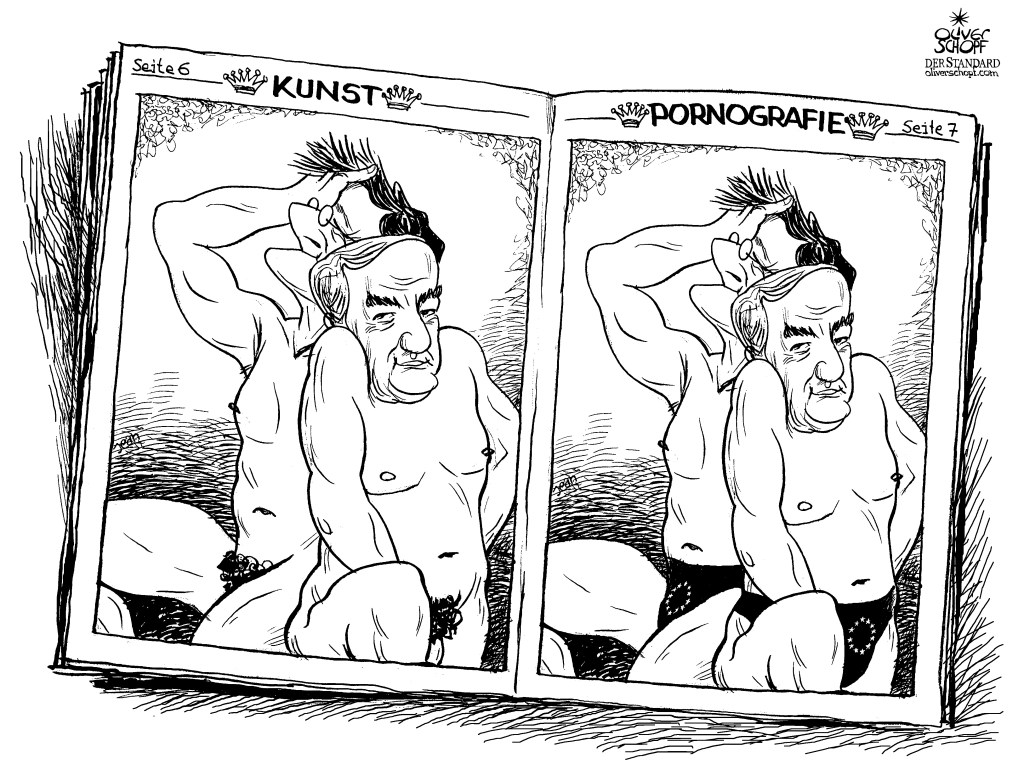

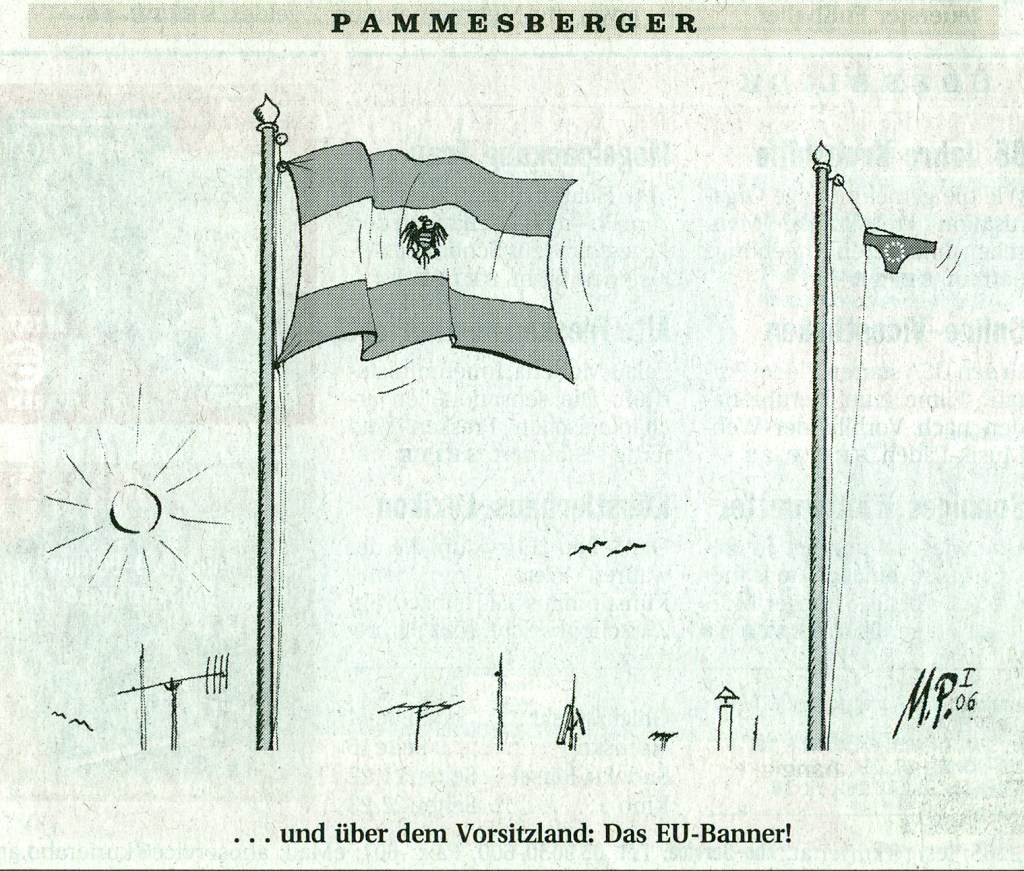
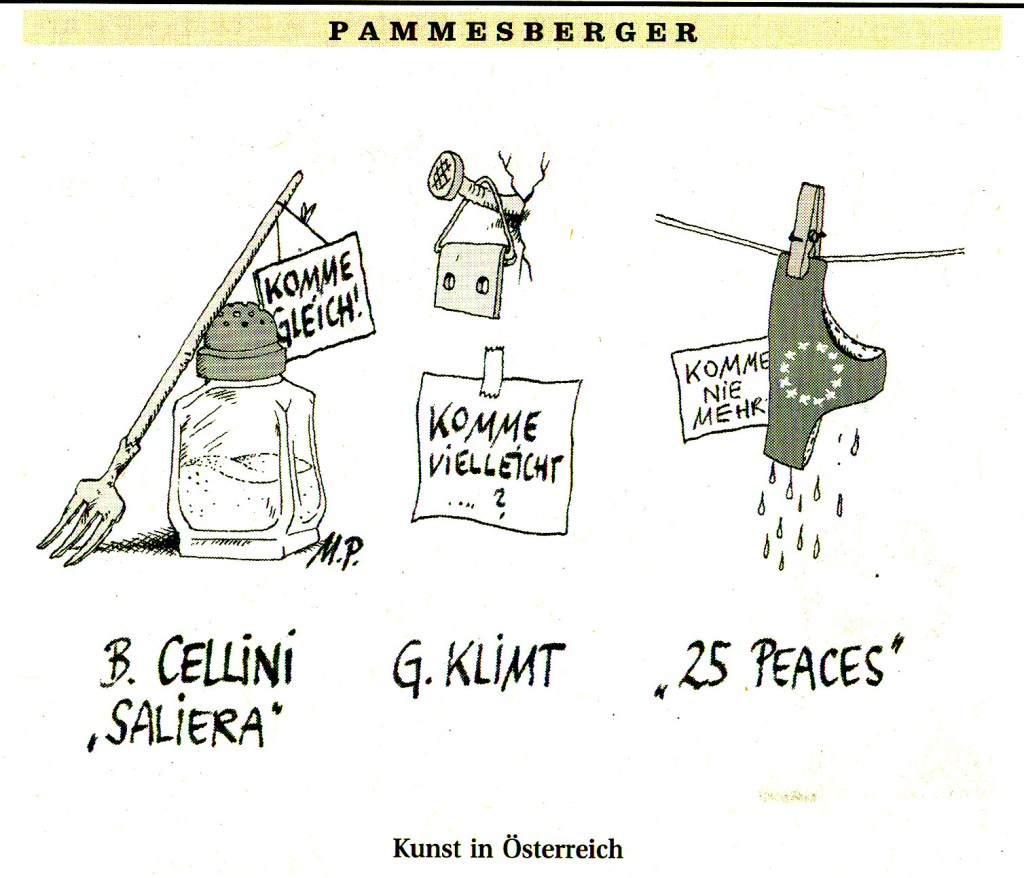
In certain periods in history, nudity revolved in the public mirror, but taken for its symbolic value in society it frequently served as a carrier for other messages. Besides the composition and the reference to the title (L´origine du monde – The Origin of the World, oil on canvas, 1866, 46 x 55 cm, by Gustav Courbet), beyond the image, my reference to Courbet directly addressed his position as an artist who was concerned with the class struggle during the time of the Paris Commune and who believed in the emancipatory role of art in the society. His artworks were banned from shows, and he was even arrested, primarily due to his political engagement. The painting L´origine du monde remained hidden for more than 120 years in private collections, but since it was discovered, it has been on display at the Musée d’Orsay in Paris since the 1980s.
…
As the European Union states sharpen control over non-citizens, the immigration police, for instance, continues the long-time practice of checking-the-warmth-of-bedsheets in intermarriages between EU- and non-EU partners.
This are excerpts from Tanja Ostojić’s essay “Crossing Borders: Development of Different Artistic Strategies,” published in Integration Impossible? The Politics of Migration in the Artwork of Tanja Ostojić, M. Gržinić and T. Ostojić eds., argobooks, Berlin 2009.
 TANJA OSTOJIĆ